
If you've ever been jolted awake by a burning, tingling, or stabbing sensation in your feet — you already know how relentless it can be.
The sheets feel like sandpaper. The slightest touch is unbearable. And just as you drift off, it starts again.
What most people don't realize is that this isn't just "bad luck" or a sign of getting older. According to recent research, peripheral neuropathy — damage or dysfunction of the nerves outside the brain and spinal cord — affects more than 20 million Americans, with millions more going undiagnosed worldwide.
Americans currently living with peripheral neuropathy — one of the most under-reported neurological conditions in the U.S., according to health estimates.
And for most of them, the standard medical conversation stops at: "Take this medication and manage your expectations."
But a growing number of people are watching a short, eye-opening video that explains something most doctors never bring up — a specific mechanism that may be driving nighttime nerve pain in ways that conventional treatments simply don't address.
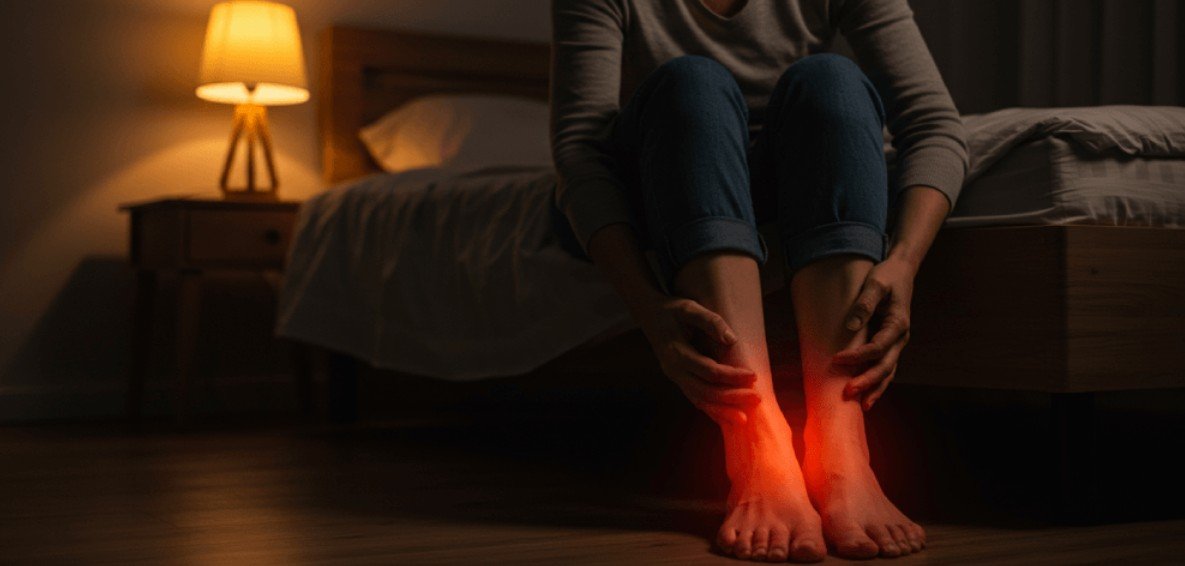
Why Does Neuropathy Get Worse at Night?
This is one of the most common — and most confusing — questions people with nerve pain ask.
During the day, movement, routine, and distraction act as natural buffers. Your nervous system is occupied. But when you lie down, three key shifts happen simultaneously:
First, distractions disappear — and pain signals your brain was filtering out come flooding in. Second, circulation patterns change as your body redistributes blood flow during rest. Third, nerve sensitivity increases as your core body temperature drops through the night.
The video linked below walks through a simple but powerful explanation of how these factors connect — and why what you do (or don't do) before bed may matter far more than most people realize.
Real People. Real Experiences.
"I used to wake up two or three times a night because of the burning in my feet. It was exhausting. After watching the video, I finally understood what was going on inside my body — and what I tried afterward really made a difference."
"I spent years trying different things. Nothing seemed to address the actual problem. This was the first explanation that actually made sense to me. My quality of life has improved significantly since then."
"I wish I had found this two years ago. The clarity alone was worth it. I shared it with my sister and three friends — all of us dealing with the same thing. Highly recommend watching the whole thing."
Frequently Asked Questions
Peripheral neuropathy refers to damage or dysfunction of the nerves located outside the brain and spinal cord. It commonly causes sensations like burning, tingling, numbness, or sharp pain — most often in the hands and feet.
Symptoms tend to intensify at night due to reduced distraction, changes in circulation during rest, and increased nerve sensitivity as body temperature drops. The video explains this mechanism in detail and what some people are doing to address it.
In many cases, symptoms can be managed or meaningfully reduced depending on the underlying cause and the approach taken. The video discusses a perspective that thousands have found helpful and that conventional approaches often overlook.
Not necessarily. Many people explore approaches beyond medication. The video presents a natural perspective that has resonated with a growing number of individuals dealing with nighttime nerve discomfort.
Anyone experiencing burning, tingling, numbness, or nerve discomfort — especially at night — and looking for a clearer explanation of what may be happening and what options exist beyond the standard medical advice.
This article is for informational and educational purposes only and does not constitute medical advice. Always consult a qualified healthcare professional before making any changes to your health routine. Results mentioned are individual experiences and are not guaranteed. This page may contain affiliate links — if you click and make a purchase, we may receive compensation at no additional cost to you.